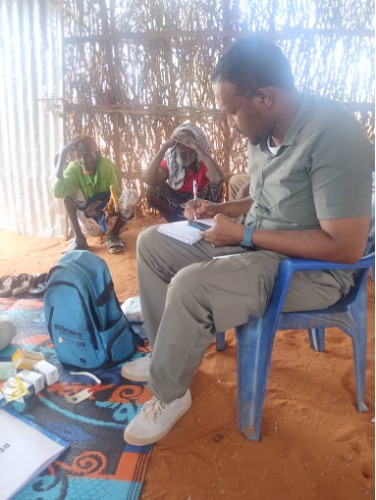
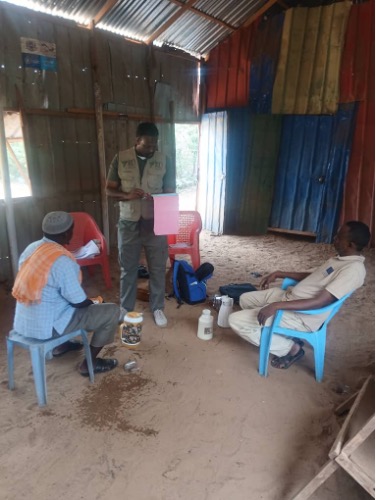
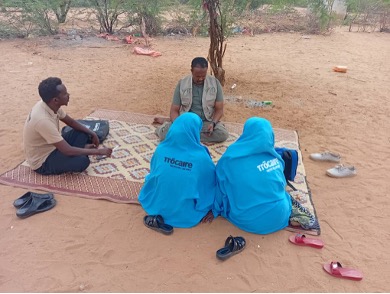
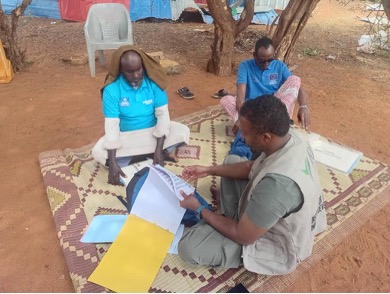
Performance and Effectiveness Evaluation of iCCM/iCCM+ Service Delivery in Gedo and Kismayo, Somalia
An independent IRID assessment of Trócaire Somalia’s community case management programme, generating evidence to strengthen child health coverage, quality of care, and long-term sustainability.
Partner & Institutional Framework
This assignment is being implemented in partnership with Trócaire Somalia, working closely with the Federal and Jubaland Ministry of Health, district health authorities, and community health structures across the Gedo region and Kismayo district. The assessment draws on IRID’s national team of community health specialists, researchers, and MEAL practitioners.
Background
Somalia’s health system continues to face significant constraints from protracted conflict, limited financing, recurrent drought, and weak health-seeking behaviour, with rural and nomadic communities — 65% of the population — disproportionately underserved. The country’s maternal mortality ratio stands at 396 per 100,000 live births, neonatal mortality at 44 per 1,000, and an estimated 20.7% of children under five are stunted, with 13.5% acutely malnourished. A chronic shortage of health workers — roughly 3.4 essential health workers per 10,000 people, below the WHO minimum of 4.5 — has limited facility-based access, particularly outside urban centres.
To close this gap, Integrated Community Case Management (iCCM) has been implemented in Somalia since 2017 as a cost-effective strategy that trains and equips community health workers (CHWs) to diagnose and treat malaria, pneumonia, and diarrhoea at community level, referring complicated cases onward. The expanded iCCM+ model adds nutrition screening, treatment, and referral through Community Management of Acute Malnutrition (CMAM), extending the reach of life-saving care to children in the hardest-to-reach communities.
Project Overview
Trócaire Somalia currently delivers iCCM/iCCM+ services across 59 sites in six districts — Luuq, Dollow, Beledhawo, Elwak, Garbaharay, and Kismayo.
Trócaire supported by 10 fixed referral and link health facilities, with 7 sites providing the expanded iCCM+ nutrition component. IRID was commissioned to conduct an independent Performance and Effectiveness Evaluation of this programme, examining service utilisation, quality of care, referral effectiveness, nutrition integration, and routine data quality, and generating practical, evidence-based recommendations for programme strengthening, scale-up, and long-term sustainability.
Objectives The assessment is structured around eight specific objectives:
Assess service utilisation trends and treatment coverage at the community level.
Evaluate the quality of CHW service delivery, including adherence to clinical protocols and referral practices.
Examine the effectiveness of referral pathways between CHWs and health facilities.
Assess integration between iCCM and nutrition programming, including CMAM linkages.
Conduct a rapid data quality assessment of routine monitoring systems.
Identify implementation enablers, bottlenecks, and contextual constraints.
Capture community perceptions, trust, satisfaction, and acceptability of services.
Generate actionable recommendations for programme improvement, scale-up, and sustainability.
Activities and Approach
IRID is applying a mixed-methods evaluation design, benchmarked against the WHO/iCCM Global Benchmark Framework’s eight programmatic components, OECD-DAC evaluation criteria, and Somalia’s national health strategies, to triangulate findings across the following workstreams:
Quantitative Data Collection
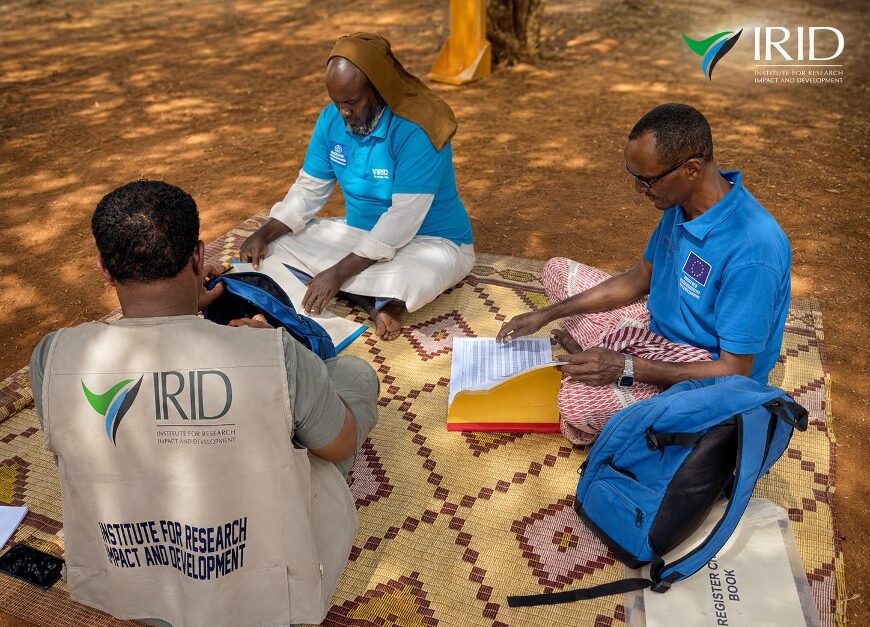
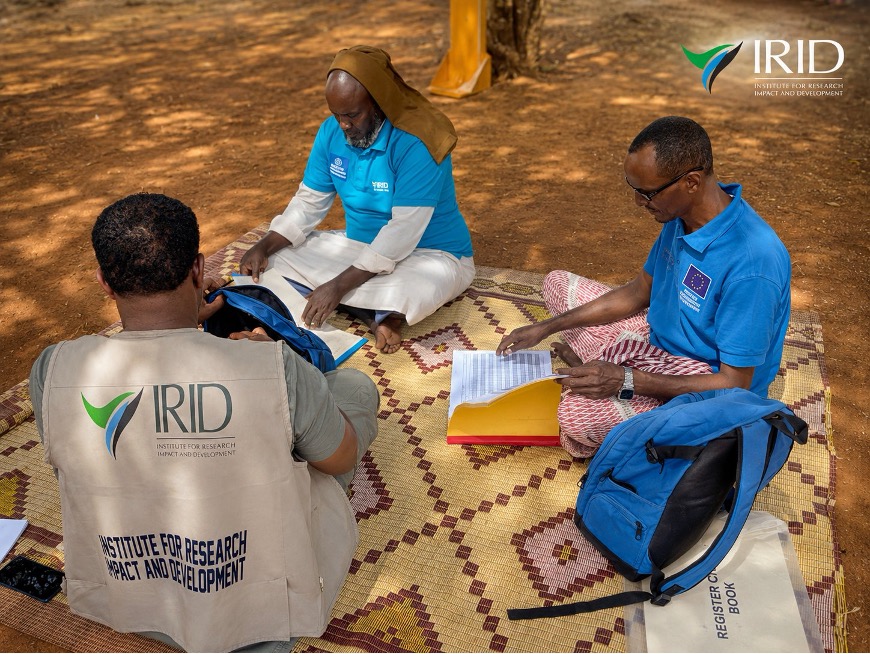
Routine data analysis — twelve months of programme data on service utilisation, treatment coverage, and referral completion.
CHW survey — knowledge, protocol adherence, and case management practice, cross-checked against registers and stock cards.
Health facility assessment — referral systems, service readiness, and feedback mechanisms.
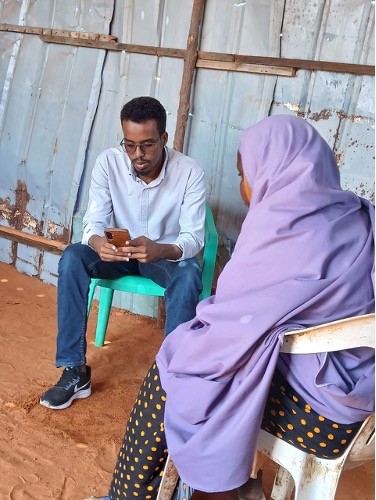
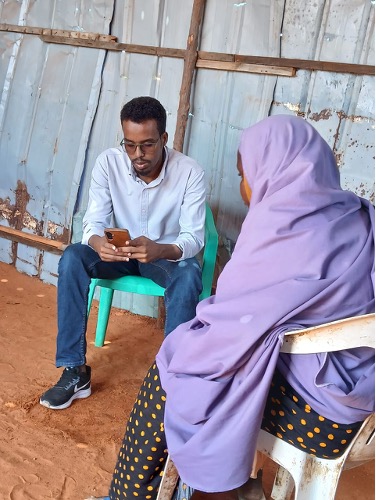
Household survey — approximately 500 households (20 per site across 25 sites) on care-seeking behaviour and service uptake.
Performance and Effectiveness Evaluation of iCCM/iCCM+ Service Delivery