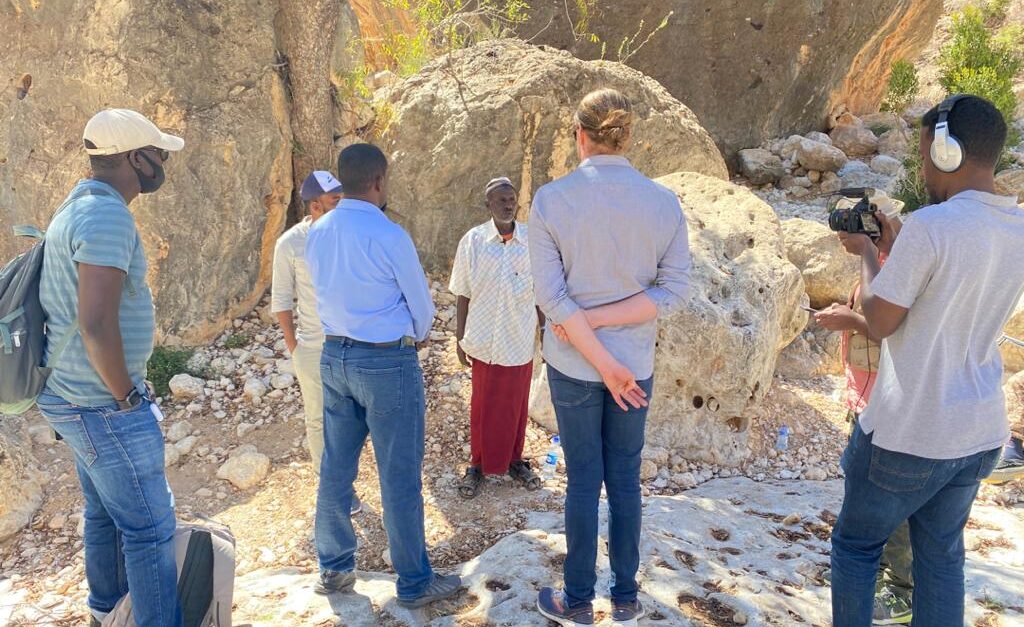
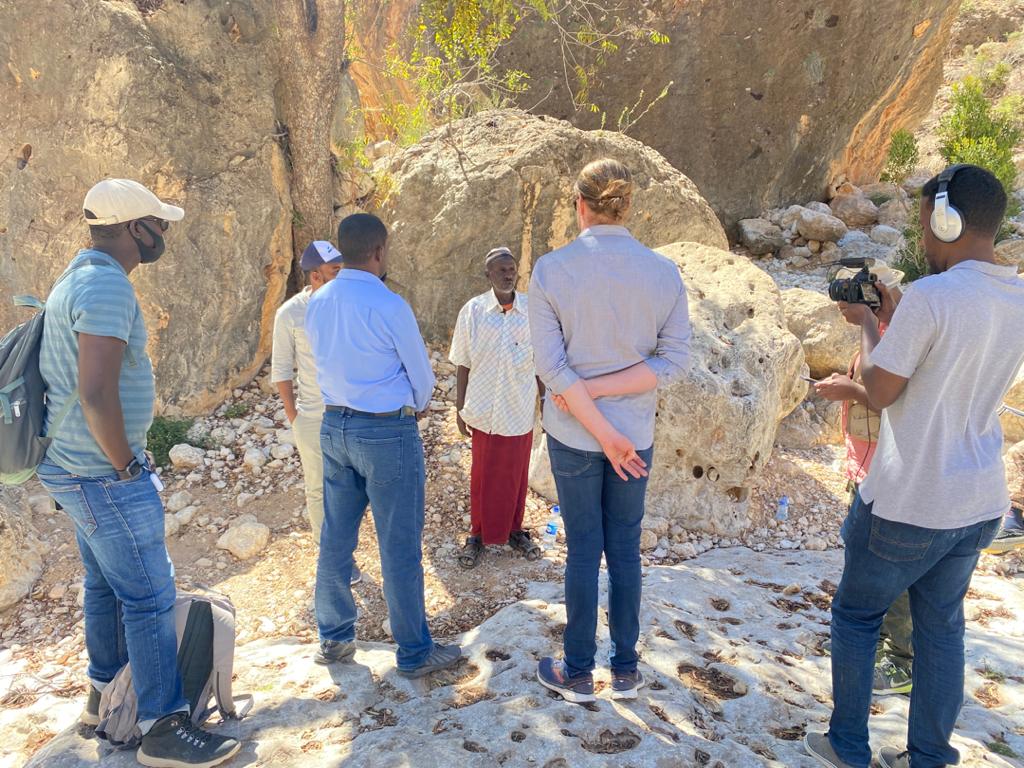
This initiative was implemented as a collaborative research and development partnership between the Institute for Science, Technology and Veterinary Studies (ISTVS) and doTERRA International, with technical engagement from academic, community, and sector stakeholders in Somaliland.
Project Overview
IRID supported and documented a multi-phase research and development initiative aimed at enhancing frankincense production while promoting forest conservation and sustainable land management in Somaliland. The project responded to increasing pressures on frankincense resources driven by rising global demand, unsustainable harvesting practices, climate stress, and declining tree health, particularly in the Cal Madow mountain range and Erigavo area, where most of Somaliland’s frankincense is produced.
The initiative combined ecological research, socio-economic analysis, capacity building, and propagation trials to strengthen both the sustainability of frankincense forests and the livelihoods of communities dependent on the resin trade.
IRID’s Role and Key Contributions
Under this initiative, IRID contributed to research design, analysis, and knowledge generation by:
Supporting baseline assessments on the status, spatial distribution, population structure, and management of frankincense trees in Erigavo.
Analyzing socio-economic drivers of overharvesting, including livelihood dependency, market pressures, and governance gaps.
Documenting traditional and emerging harvesting, management, and utilization practices, including tree health and regeneration trends.
Supporting the identification and documentation of best practices for frankincense management, drawing from Somaliland, Oman, and Ethiopia.
Contributing to the development of training materials, guidelines, and policy-relevant knowledge products on sustainable frankincense management.
Key Activities Implemented
Baseline ecological and socio-economic surveys conducted across frankincense-producing communities.
Evaluation of frankincense propagation techniques, including seed propagation, cuttings, and tissue culture methods.
Assessment of Boswellia species diversity and agronomic practices sourced from Somaliland, Oman, and Ethiopia.
Expansion of propagation infrastructure at IGAD Sheikh Technical and Veterinary School (ISTVS), including screen houses and tissue culture facilities.
Delivery of community-based trainings for farmers and harvesters on sustainable propagation, tree management, and harvesting techniques.
Key Outputs
Comprehensive baseline report on frankincense ecology, management practices, and utilization in Erigavo.
Documentation of best practices and management guidelines for sustainable frankincense production.
Training manuals and extension materials on propagation, agronomic management, and harvesting techniques.
Policy-oriented briefs and recommendations on frankincense management and forest conservation.
Expected Outcomes
Improved knowledge and practices among frankincense producers on sustainable tree management and harvesting.
Increased availability of healthy frankincense seedlings for restoration and expansion.
Strengthened institutional and community capacity for frankincense conservation and value-chain development.
Enhanced resilience of frankincense forests and dependent livelihoods.
Long-Term Impact
The initiative contributed to the sustainable management of Somaliland’s frankincense resources, improved rural livelihoods, and strengthened the evidence base for conservation-oriented policies. By linking forest conservation with economic value chains, the project supported long-term environmental sustainability and inclusive economic development in frankincense-producing regions.